The Foreigner in My Own ZIP Code
Finding My People in the Back Seat of an Uber
In just one week, I have met people from Vietnam, Morocco, Iran, Cuba, Wales, Korea, Israel, Brazil, Mexico, Uruguay, and Bolivia.
Growing up in rural Oregon, my world was small. I knew very little of other cultures; I don’t think I even spent time with someone from Mexico until I attended university at age forty. But the world has changed. The U.S. has changed. And I never realized how important my own voice would become until I felt the ground shift beneath me.
The Noise of the Wall
The night before, I had been annoyed by loud music thumping through my hotel walls. So, when I stepped into my Uber and heard what I thought was Mexican music playing, I instantly felt that same irritation.
I didn't say anything. I didn't ask him to turn it down. I just sat there, staring out the window, wishing the ride would end.
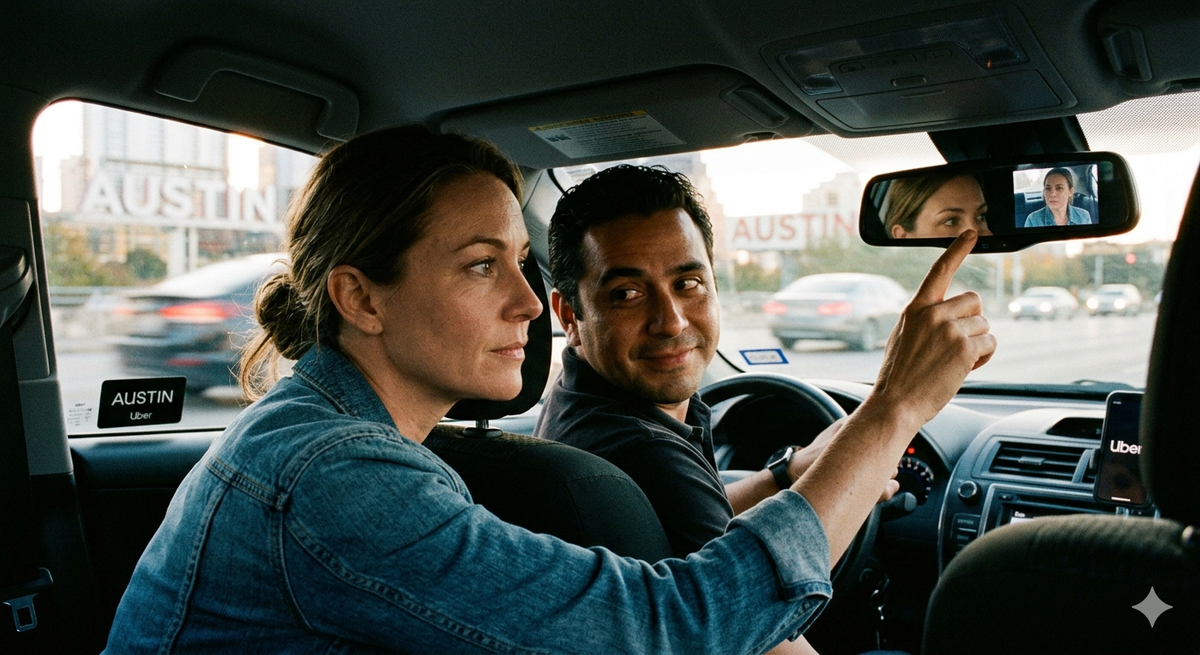
Then, the driver did something that caught me off guard. He touched his rearview mirror. With a tap, it displayed a digital view of me in the back seat; with another tap, it returned to the road behind us. I was fascinated. I’d never seen technology like that, so I asked him about it.
His response changed everything.
The Shift
"I don't speak English," he said softly. "I try to learn."
This is when my heart sank, and instantly my energy shifted. As soon as I realized he was a non-native speaker, my guilt took over. I had spent the ride stewing in silence when I could have simply connected.
I switched to Spanish and told him I work with people just like him. I asked if he would try to tell me his name in English. He was hesitant, smiling shyly.
"Hi, my name is Lisa," I encouraged. "What is your name?" "No... no..." he smiled. "It’s okay," I said. "Repeat: My name is..." "My name is Javier," he finally said.
We talked for the rest of the trip. I learned he had been in the U.S. for three years and was from Cuba, and ashamed he couldn't speak English. By the time I stepped out of the car, I felt a deep sense of gratitude. I encouraged him to keep going on his English and wished him lots of luck.
A Different Kind of Home
I have been struggling to find my footing since returning to the U.S. After eight years in Europe, I arrived without a car, moving from town to town, feeling like a foreigner in my own country. I’ve been searching for "my people," wondering where I belong.
In that Uber, I realized they’ve been surrounding me all along.
My people are the Brazilian driver who picked me up at the airport. They are the Israeli curator struggling with an app. They are Javier, playing the music I thought I didn't like, reminding me that I have a special place in my heart for those who struggle with my language.
I have walked their path. I know what it feels like to enter a foreign country and feel like you don't belong—even when that country is your own. I finally realize that these "foreigners" are my people. Because, in this new version of home, I am a foreigner, too.