English Is the Secret Sauce to Getting What You Want — And Here Is Why

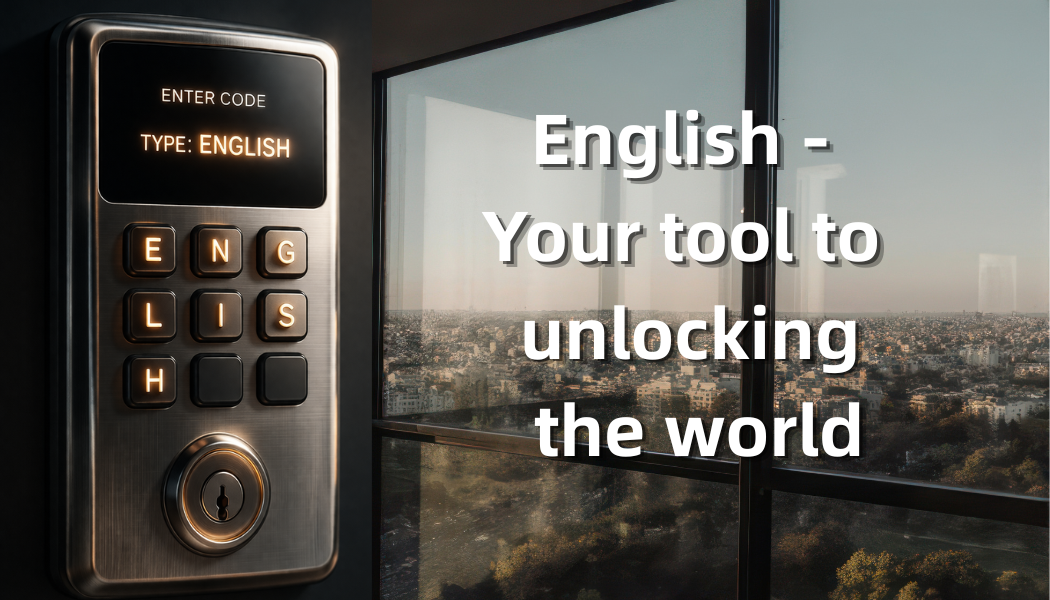
I have watched people's lives change because of English.
Not because they became someone different. Not because they gave up their culture, their identity, or their mother tongue. But because they picked up a tool — and used it.
English is that tool. And like any good tool, it doesn't care who you are, where you come from, or what you believe. It is available to everyone. It doesn't discriminate.
That is not a threat. That is a gift.
Nobody Voted for English. It Emerged.
No committee decided that English would become the world's shared language. No empire successfully imposed it on every corner of the globe through force alone. It spread because it worked. Because trade, science, diplomacy, and technology needed a shared medium — and English became that medium.
The most honest proof of this? The people who most loudly reject English's dominance still use it to spread that message.
Iranian officials communicate in Farsi — but their state media publishes in English so the world will listen. The critics of English write their critiques in English so they reach a global audience. The medium keeps proving the point, regardless of the message it carries.
English Is the Neutral Ground
Consider Catalonia. A region already navigating a charged internal conflict between Catalan and Spanish — two languages, two political identities, both fighting for legitimacy.
A client of mine, a digital marketer, was shamed by a Catalan man for speaking Spanish in a department store. Not English. Spanish.In a room where choosing between two local languages is already a political act, English often becomes the only option that carries no allegiance. No tribal signal. No sides.
English didn't create that conflict. It offered a way out of it.
It Saves Lives
This is not metaphor. Every commercial pilot and air traffic controller in the world — regardless of nationality — communicates in English. It is the international standard for aviation communication, established precisely because a shared language in the cockpit is not a cultural preference. It is a safety requirement.
When lives are at stake, the world doesn't debate. It reaches for the tool that works.
It Connects People Who Have No Other Bridge
One of my clients attended a retreat in Mexico. He's Colombian. He met a woman from the Philippines. She doesn't speak Spanish. He doesn't speak Filipino. They had no shared language — except one.
They fell in love.
English didn't erase their cultures. It didn't ask either of them to be less Colombian or less Filipino. It simply gave two people, born on opposite sides of the world, a way to find each other.
A grandmother speaks Russian. Her granddaughter grew up speaking Greek. The gap between them could have been silence — a relationship reduced to gestures and guesswork. But they both speak English. And so they talk. They laugh. They stay connected across a distance that would otherwise be unbridgeable.
Tell me: where is the problem in that?
It Opens Doors That Were Never Meant for You
English is one of the strongest tools for income mobility in developing economies. It is the language of scholarship applications, international job postings, visa interviews, and asylum processes. For many people, English is not a career tool. It is an exit door.
It is how someone born into a closed economy competes on a global stage. How someone from a difficult situation makes their voice heard beyond their borders. How a professional who was brilliant all along finally gets to be seen as brilliant by the people with the power to act on it.
The Victim Mentality Is the Real Trap
Here is what I know from working with non-native professionals every day: the moment someone shifts from "English is something done to me" to "English is something I can use." — everything changes.
Not just professionally. Something shifts inside. A sense of power replaces a sense of exclusion. Confidence replaces apology.
Framing English as a burden hands people a reason to stay stuck. It makes the struggle feel important rather than making the result important.
I didn't choose English to be the world's tool. I didn't design that system. But I have spent years watching what happens when people stop resenting it and start using it. I have seen careers transform. Relationships form. Families reconnect. Borders dissolve.
Now — Sharpen It
A tool can do the job. But a sharp tool does it faster, cleaner, and with less effort.
Basic English will get you through the door. Sharp English — the right words, the right tone, the right confidence for the right moment — will get you the job, close the deal, and make the impression that changes everything.
You don't need to start over. You just need to sharpen what you already have.
Pick Up the Tool
English is not your enemy. It is not a declaration of war against your culture. It doesn't ask you to be someone you are not. It is a key. And there are doors all over the world waiting to be opened.
You can leave it in the corner with the rest of the things you never use. Or you can pick it up — and sharpen it — and watch what happens next.
Lisa is the founder of The Elephant Method, a Business English coaching practice for non-native professionals at the corporate level. The Method supports you, guides you, and assists you across the current of life.